

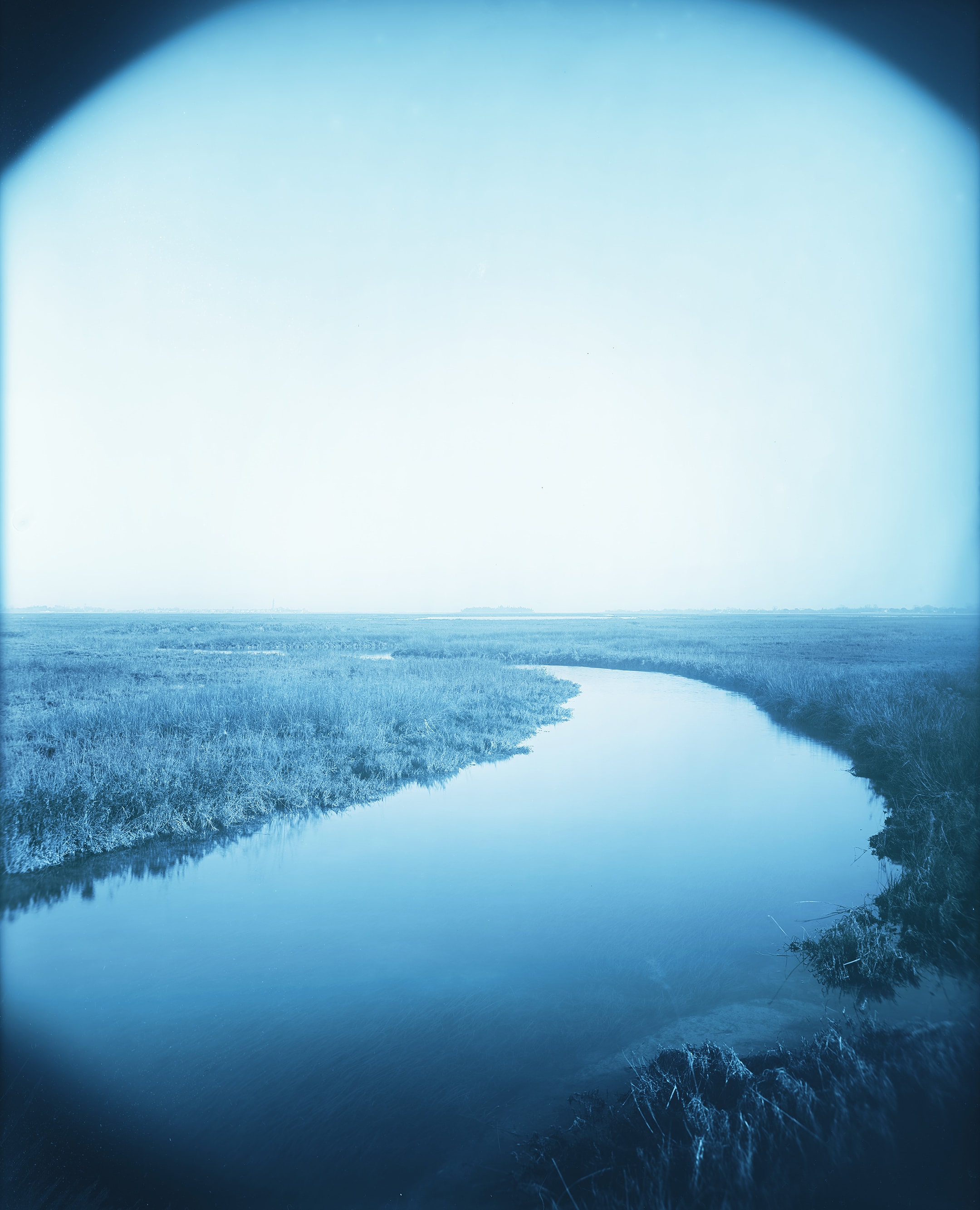
Type C-print
This series was produced during my residency in December 2023 at Spazio Berlendis, an art foundation and exhibition space in Venice, Italy. The building itself is a renovated former gondola factory dating back to the 17th century—an architectural site that quietly embodies the layered relationship between function and history within the city.
Venice, often described as a city destined to be submerged, resonates deeply with my ongoing exploration of time as a continuum encompassing past, present, and future. However, upon arrival, I was confronted by a city shaped almost entirely by tourism, where the original relationship between land, water, and daily life appeared displaced by spectacle and consumption. For a time, this estrangement unsettled my purpose as an artist.
The project began to take form when I left the city behind and traveled into the Venetian lagoon. This territory—situated between civilization and nature, continuity and erosion, memory and oblivion—revealed itself as Venice’s suppressed origin and its possible future. My journeys extended beyond the accessible islands to remote, uninhabited territories and wetlands known as barene, where human presence is minimal and time seems suspended. Locations such as Torcello, Poveglia, and San Francesco del Deserto functioned not merely as geographic points, but as thresholds between historical consciousness and imagined disappearance.
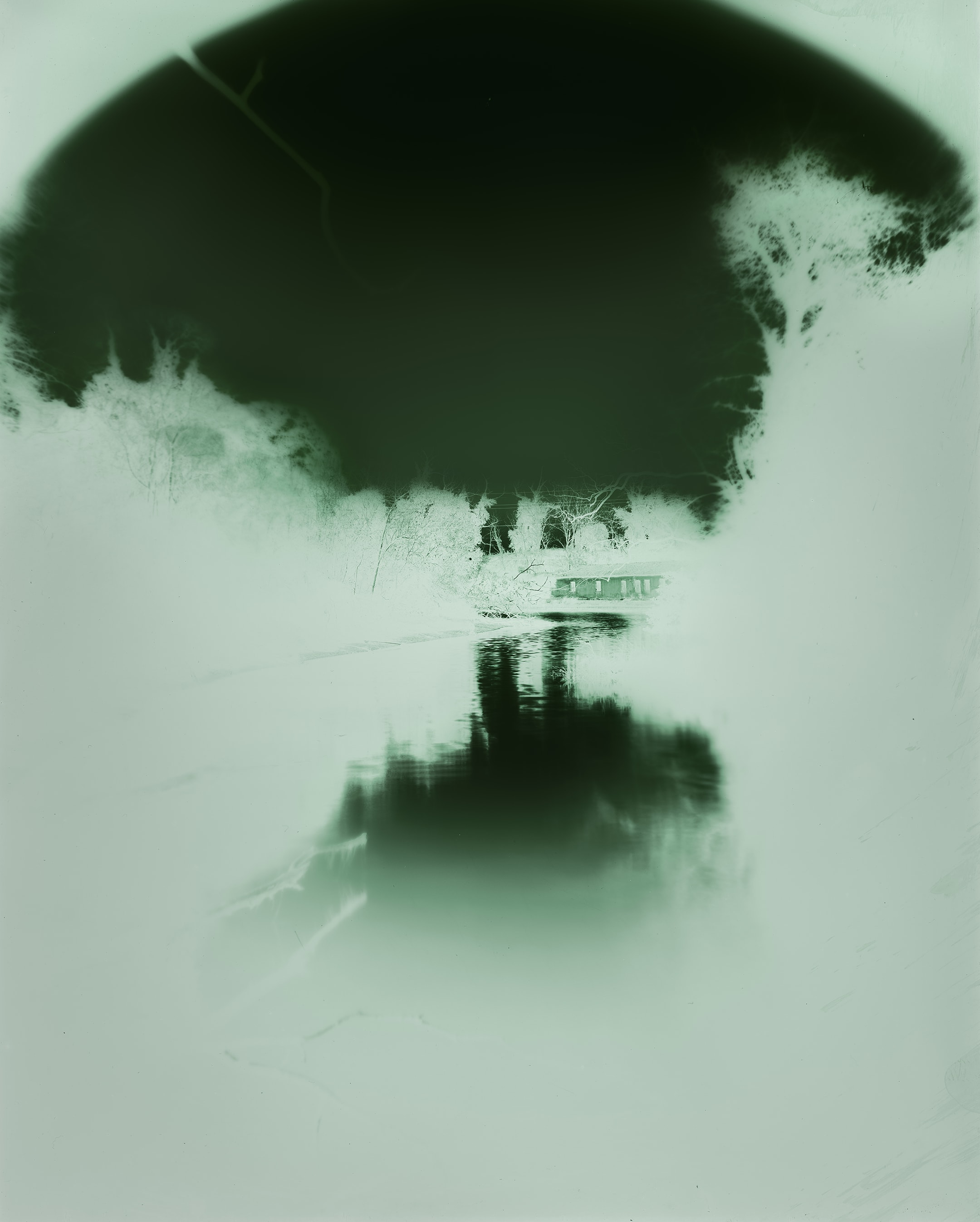
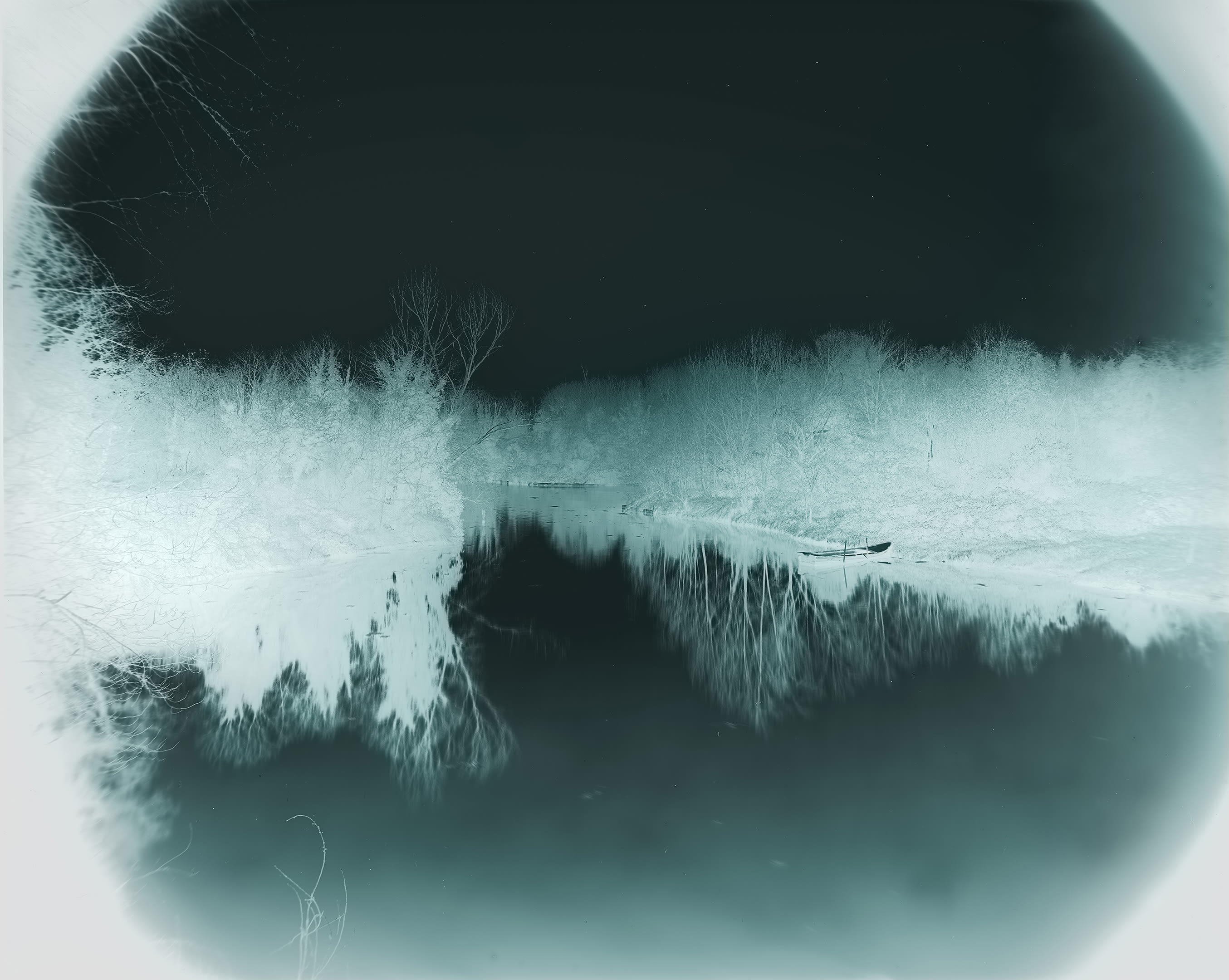
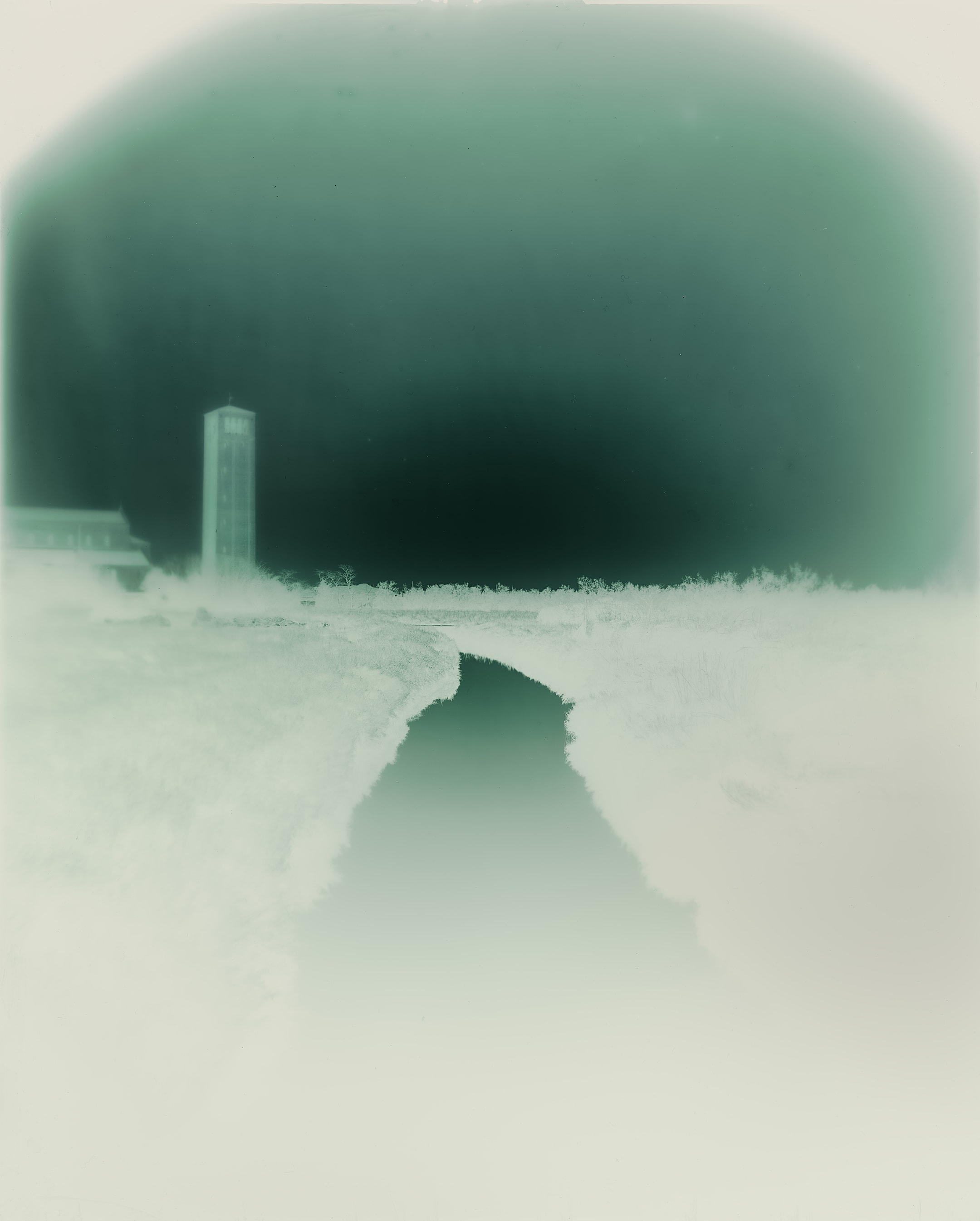
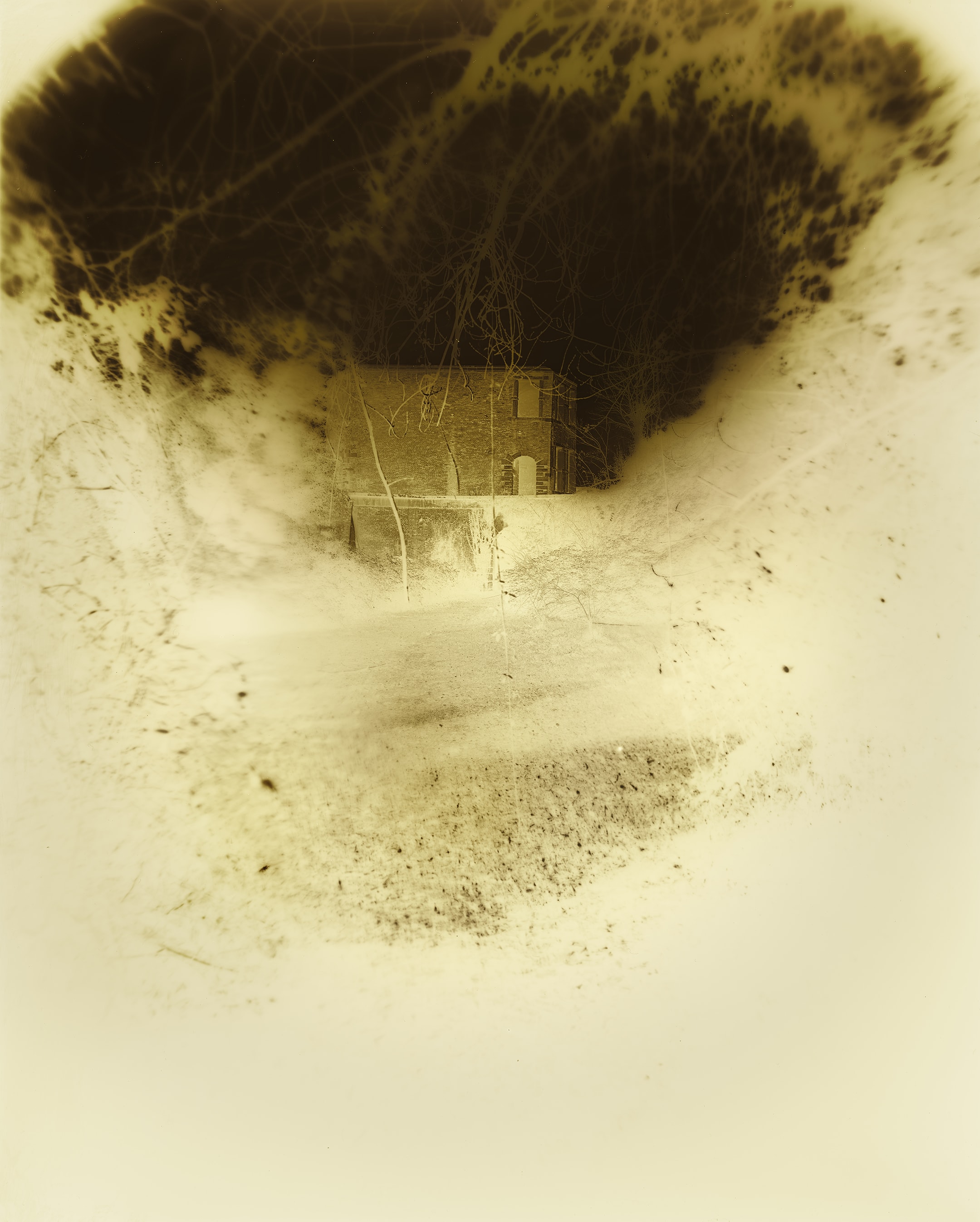
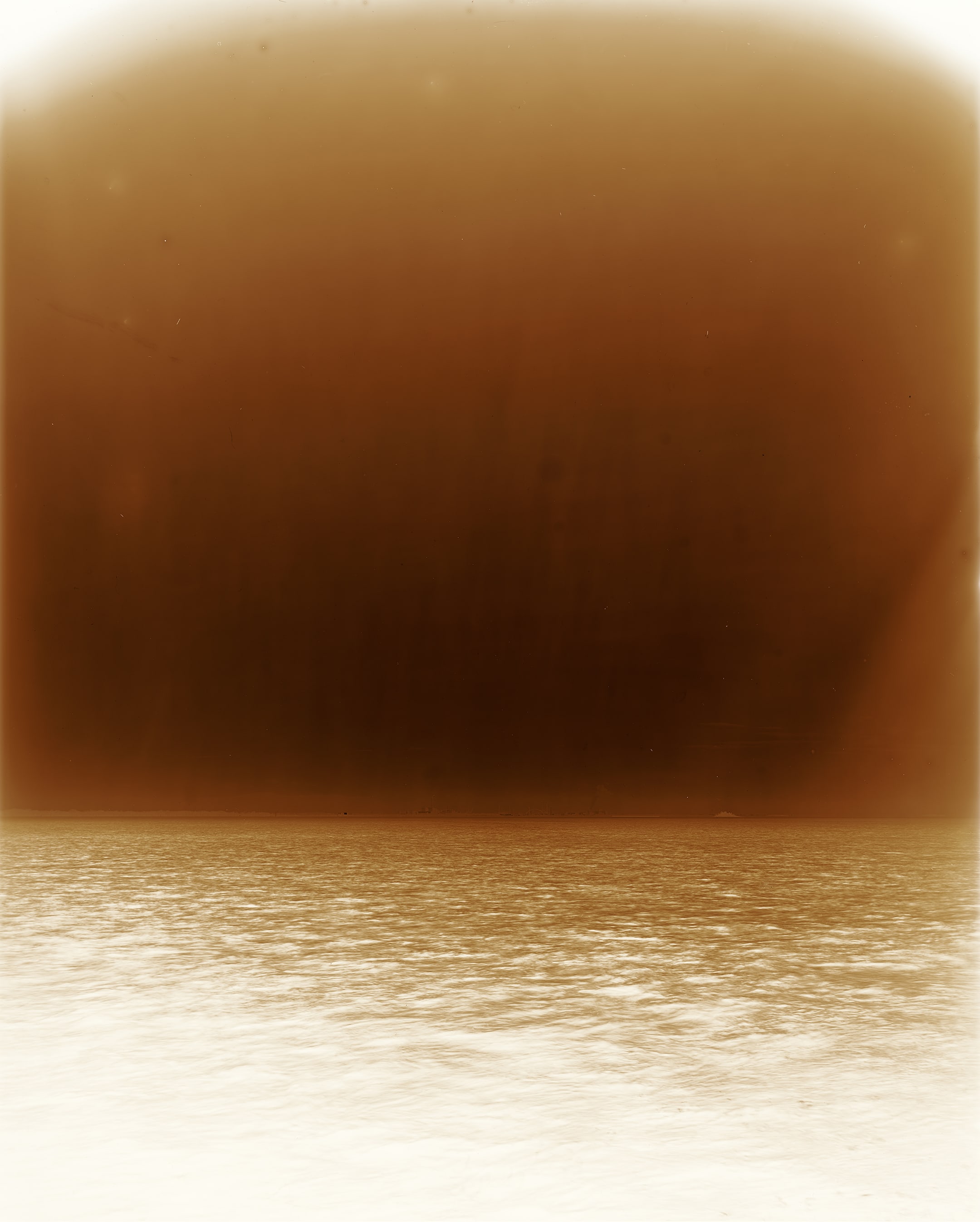
What I encountered in these landscapes was not documentary subject matter but temporal density. The ruins, monasteries, fortifications, and deserted wetlands all operate as accumulations of time rather than as legible historical narratives. The images do not seek to reconstruct Venice’s past nor illustrate a speculative future, but to collapse both into a single visual plane where duration becomes perceptible.
For this project, I employed the dry plate photographic process and intentionally interwove positive and negative imagery. This technique introduces material uncertainty into the image-making process—stains, reversals, and interruptions become integral rather than incidental. The medium’s fragility mirrors Venice itself: a place shaped as much by erosion and loss as by preservation and beauty.
Ultimately, this series considers photography not as a tool of preservation, but as a site of exposure—a place where time, matter, and absence converge. Venice emerges not as a static monument, but as a living threshold between what has been and what may soon vanish.
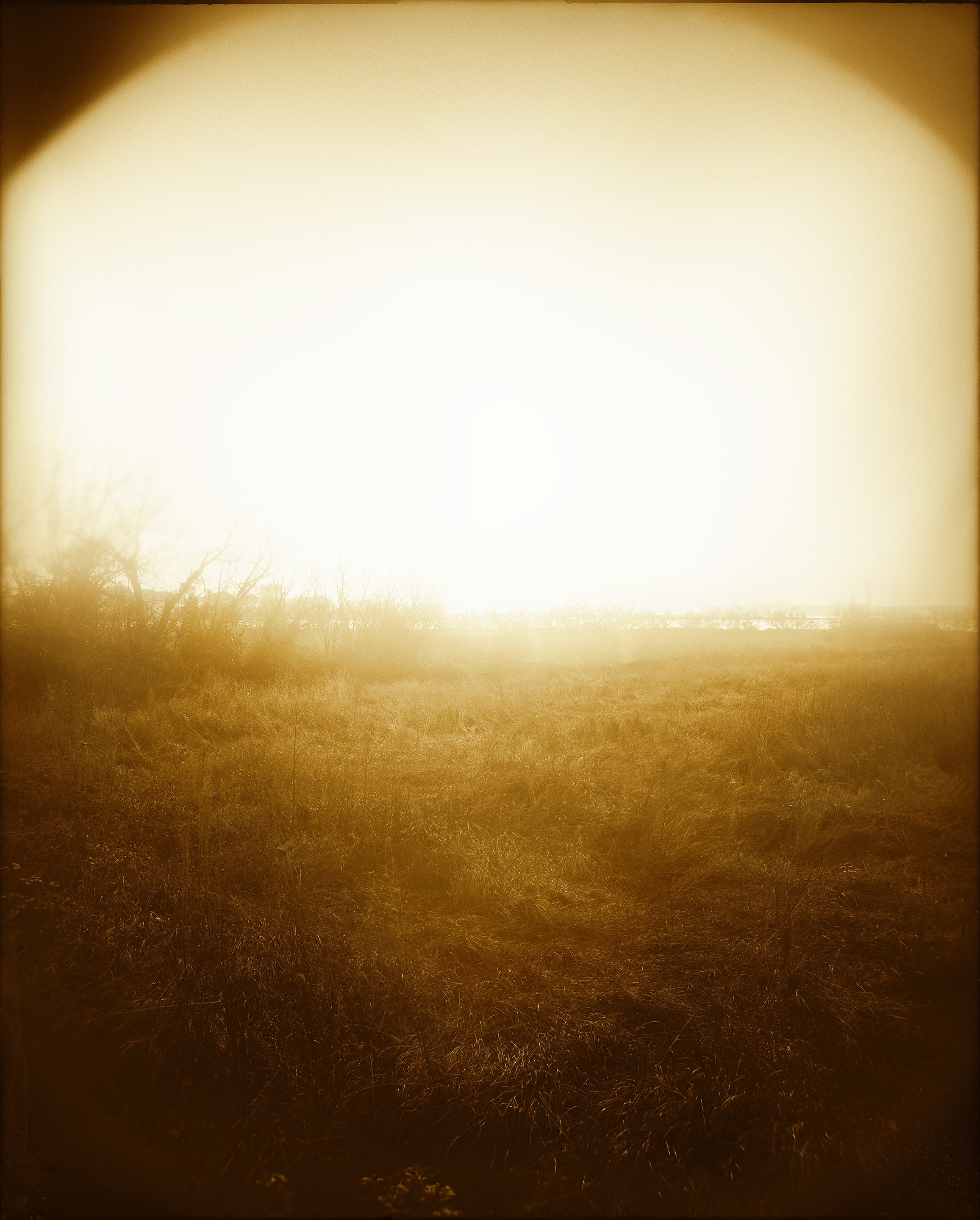
Type C-print
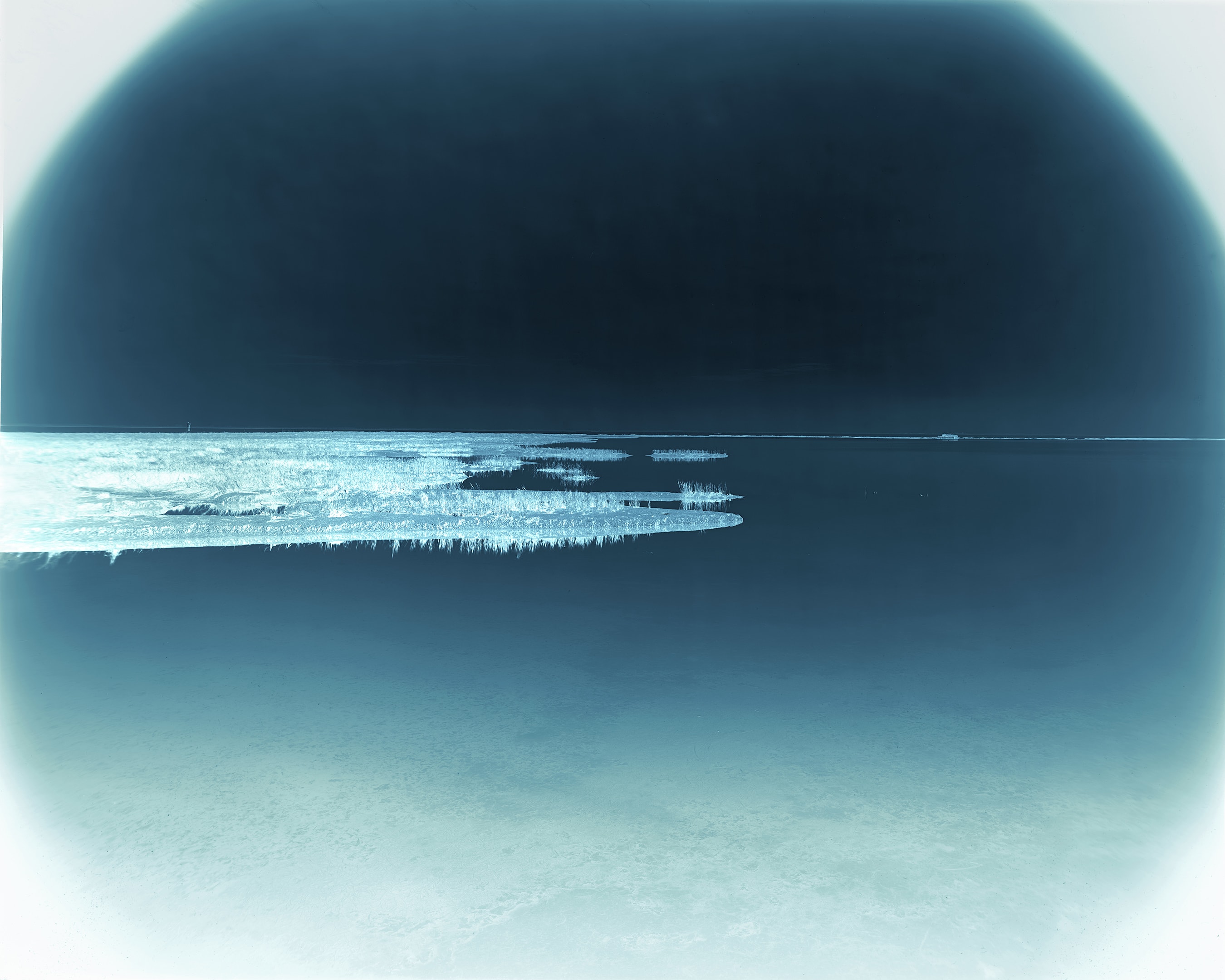
Type C-print
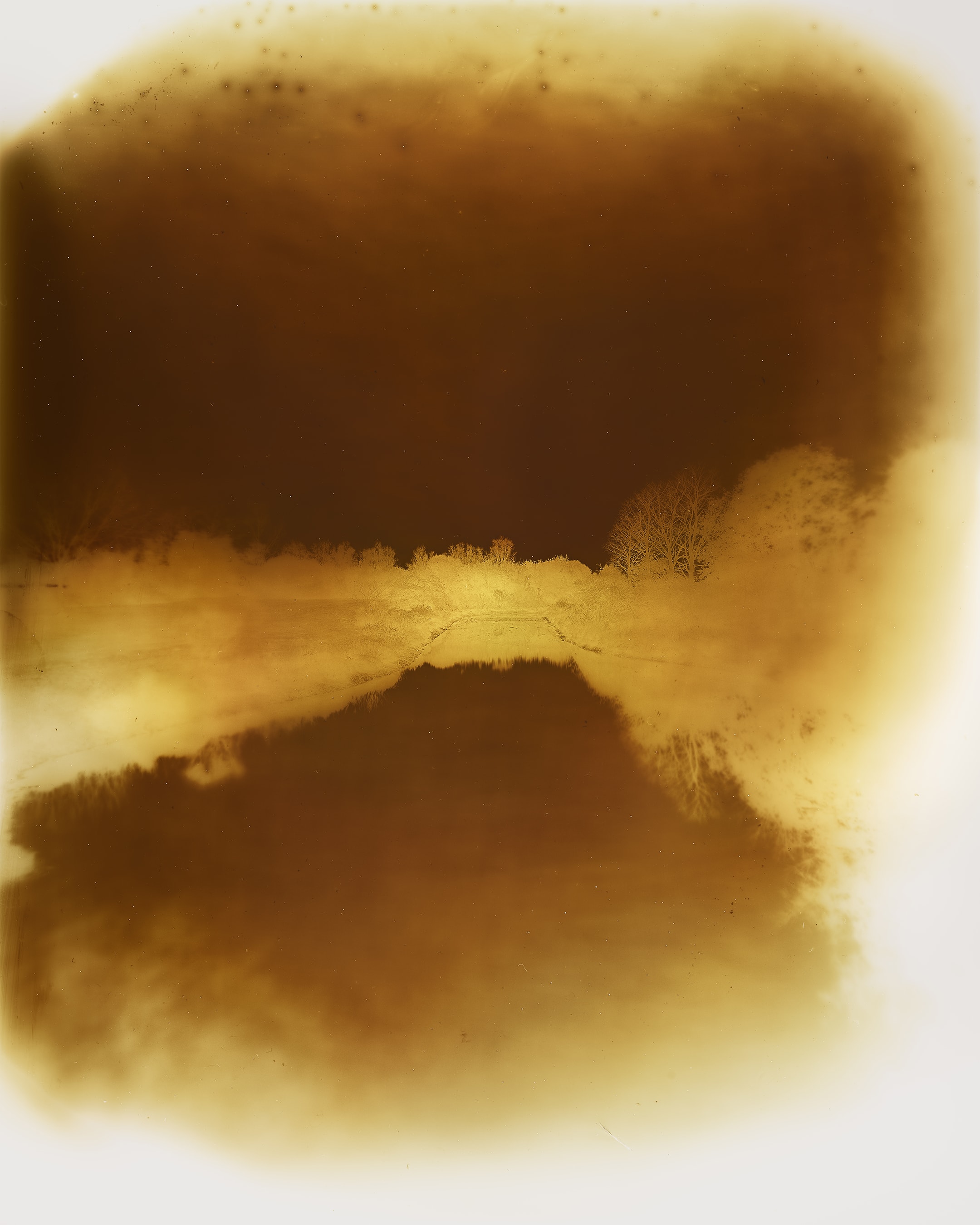
Type C-print
Type C-print
Type C-print
Type C-print
Type C-print

Type C-print

Type C-print
Type C-print
